
Morjim Beach: A Complete Guide for First-Time Visitors
Morjim sits at the northern end of the North Goa coastal stretch, separated from Vagator and Anjuna by the Chapora River. That separation keeps Morjim quieter, less developed, and genuinely different in atmosphere from the beaches closer to Calangute. This guide covers what to expect, when to visit, and how to get there from Assagao.
Getting to Morjim
The most straightforward route from Assagao or Anjuna is by scooter, taking the road through Siolim and crossing the Chapora River. Total journey time from Assagao by scooter is around 25 to 30 minutes. Taxis are available from Mapusa and the coastal villages, though the ferry crossing requires passengers to dismount and walk across.
The Beach
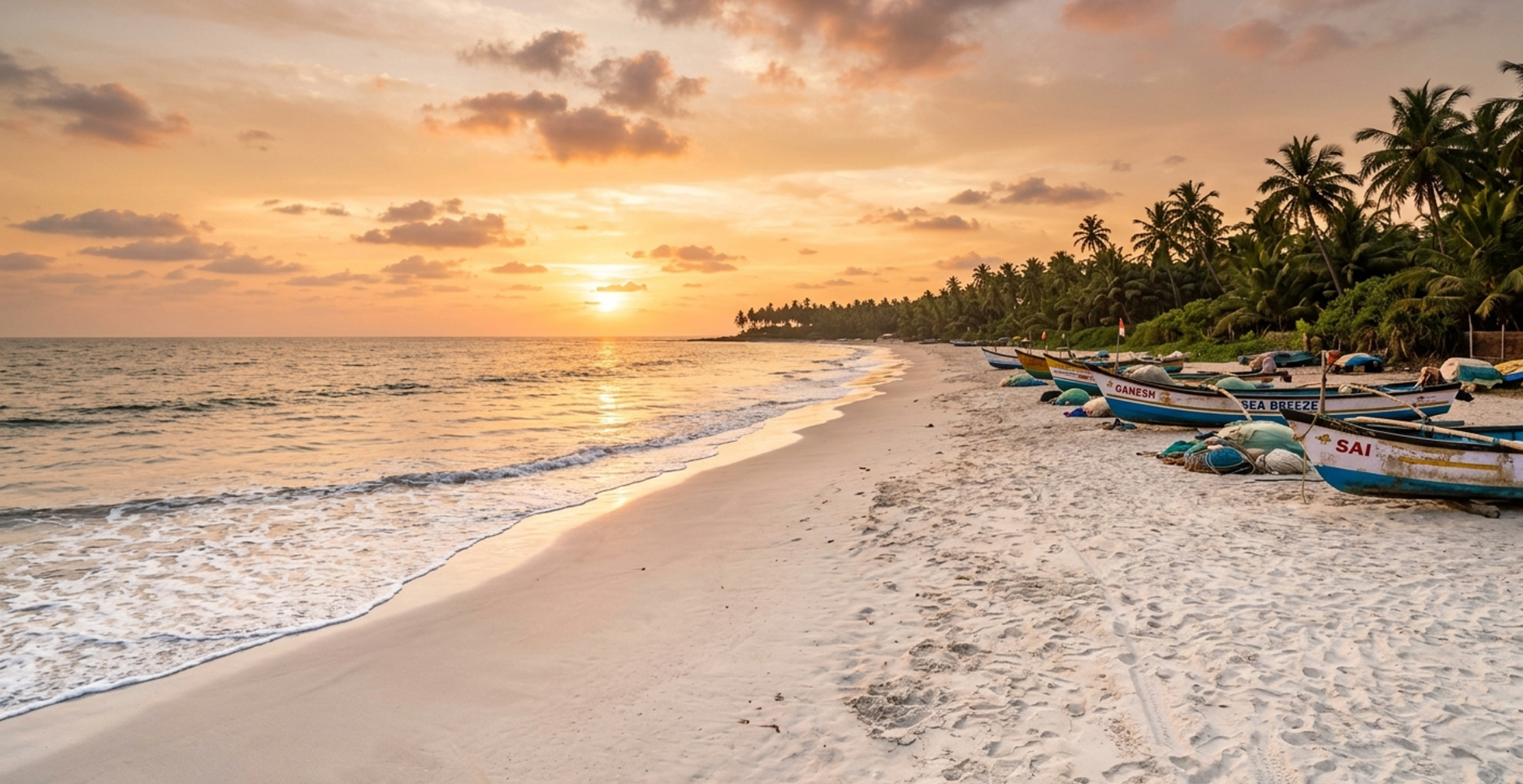
Morjim is a long, wide beach with relatively gentle waves and no rocks in the main swimming area. The northern section is the quietest and attracts visitors who want space rather than facilities. The southern section has a line of beach shacks and restaurants. The sand is pale, the beach faces west, and the sunsets are among the better ones on the North Goa coast.
Olive Ridley Turtles
Morjim is one of the primary Olive Ridley turtle nesting sites on the Goa coast. Nesting season runs from October to March, with hatchlings emerging in the first weeks of the new year. The Forest Department monitors nesting activity, and a section of beach is typically cordoned off during peak nesting to prevent disturbance.
Food and Shacks
The shacks serve fresh fish, prawns, rice dishes, and cold beer. A cluster of cafes near the main beach entrance reflects the long-established preference of Russian and Eastern European visitors, with menus extending to Russian and Georgian dishes alongside the standard Goan options.
When to Visit
November to February is peak season. March brings quieter conditions with fewer visitors and lower prices. April to September is monsoon season and the beach is officially closed for swimming. For a quiet day with the beach largely to yourself, October or early November before the main season begins is a good option.
Best for: Visitors wanting a quieter beach than Anjuna or Calangute, nature enthusiasts interested in turtle conservation, those crossing to explore the more northerly coast.
The Best Cafes in Assagao: Where to Work, Linger, and Eat Well
Assagao has developed one of the more interesting cafe cultures in North Goa, shaped not by the beach economy but by the village's unusual mix of long-stay visitors, remote workers, and residents with strong opinions about coffee and food. The cafes here tend to be more independent and more considered than what you find in the coastal strip, and several have become genuine neighbourhood anchors rather than tourist pit stops.
What Sets Assagao Cafes Apart
The coastal villages of Anjuna, Vagator, and Calangute have built their cafe scenes around footfall from beach visitors. Most close after the season, pivot menus to suit transient tastes, and occupy temporary structures that come down in April. Assagao cafes operate on a different model. The clientele includes people who return for weeks or months at a time, and the standard of coffee, food, and atmosphere reflects that. A cafe that is mediocre does not survive long in a village where regulars have alternatives.
Third Culture Cafe
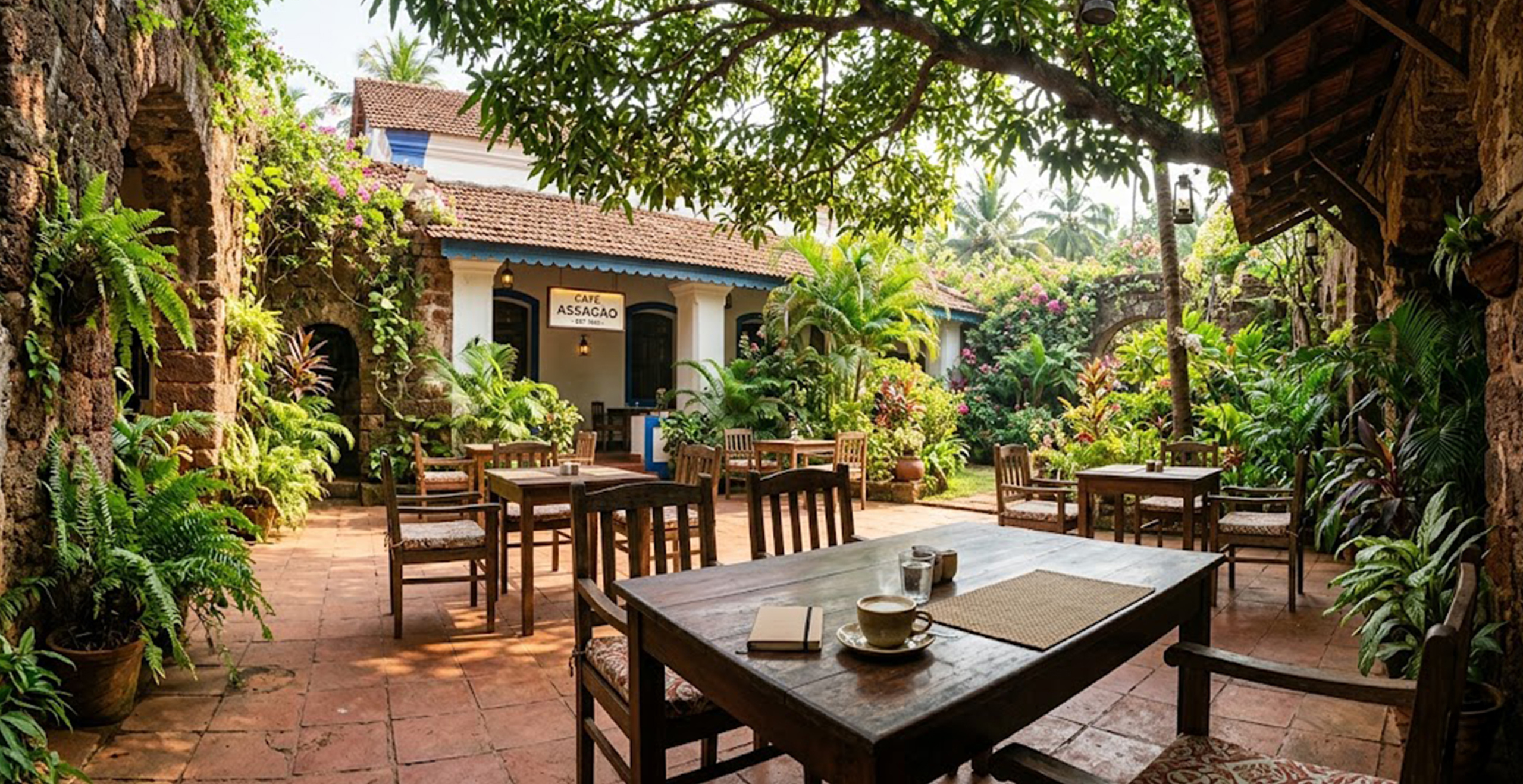
Third Culture is one of the most referenced cafes in Assagao, occupying a converted heritage space with an open courtyard. The coffee is taken seriously, with rotating beans from Indian specialty roasters. The food menu runs to proper brunch dishes, toasts, and grain bowls. It draws remote workers in the mornings and social visitors through the afternoon, and the outdoor seating under the trees is among the better places to spend a morning in North Goa.
Baba's Organic
Baba's is a smaller and more informal space with a loyal following among health-conscious regulars. The menu focuses on organic and locally sourced ingredients, with smoothies, grain bowls, and light meals. The atmosphere is relaxed enough that nobody minds a long stay with a laptop.
Gunpowder at Midday
Gunpowder is better known as a dinner destination for regional Indian cooking, but it is worth visiting for lunch when it operates at a quieter pace. The terrace setting in a restored Portuguese house provides surroundings that make an ordinary meal feel more considered.
Practical Notes
Most Assagao cafes are open from around nine or ten in the morning through the afternoon. Wi-Fi is generally good, and most spaces have power points if asked. Outside peak season, tables are easier to find and the pace is slower.
Best for: Remote workers, slow-travel visitors, food-conscious travellers, anyone wanting a genuine neighbourhood cafe rather than a tourist stop.
Assagao vs Anjuna vs Vagator: Choosing Where to Stay in North Goa
Assagao, Anjuna, and Vagator sit within a few kilometres of each other in North Goa, but they offer genuinely different experiences. Getting the choice right makes a significant difference to what your trip actually feels like, so this guide sets out honestly what each village offers and which kinds of travellers are most likely to enjoy each one.
Anjuna
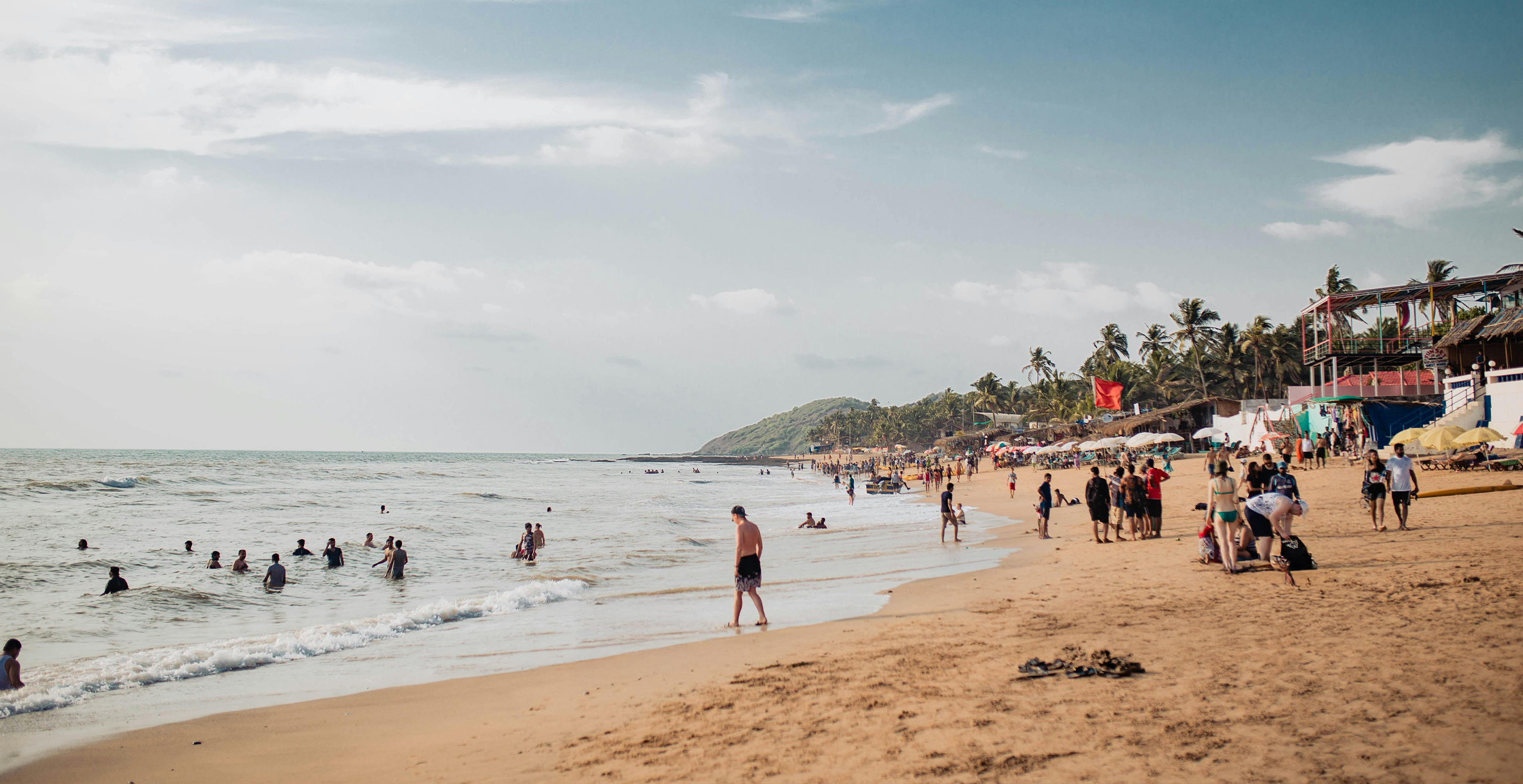
Anjuna is the oldest name in North Goa's tourist geography and it earns its reputation. The beach is wide, west-facing, and delivers consistently good sunsets. The Wednesday Flea Market has been running for decades and, while it has grown considerably from its original form, remains one of the livelier shopping and social events in the region. There is a long-established cafe and restaurant scene and plenty of accommodation at various price points.
Anjuna works well for visitors who want to be in the middle of things: easy beach access, a large number of dining and nightlife options, frequent transport connections to the rest of North Goa, and a social atmosphere that does not require much planning to tap into.
The trade-off is noise and crowds, particularly during peak season from November to February. The main road through Anjuna can be congested, the beach gets busy, and the village does not offer much in the way of quiet or retreat. Accommodation with private space costs considerably more than basic options, and the overall setting is more commercial than heritage-focused.
Best for: First-time Goa visitors, travellers who want beach access as the first priority, social travellers, anyone attending specific events like the Flea Market
Vagator
Vagator offers something visually distinctive: red laterite cliffs dropping down to two beaches, with Chapora Fort on the headland above. The setting is dramatic in a way that flat beach villages are not, and the views from the cliff paths around sunset are genuinely worthwhile.
Over the past decade, Vagator has also become the centre of Goa's international electronic music culture, with venues like Hilltop drawing significant crowds during the season. If you are visiting Goa specifically for its music scene, Vagator is the most obvious base.
The food and cafe scene in Vagator has improved considerably and now includes some well-regarded restaurants alongside the beach shacks. The atmosphere is younger and more energetic than Assagao or the quieter parts of Anjuna, and the beaches are less crowded than Baga or Calangute while still being accessible and swimmable.
Vagator is not the right choice if quiet is a priority. The music culture is central to the village's identity and the noise levels reflect that, particularly at weekends.
Best for: Electronic music enthusiasts, those wanting a dramatic coastal setting, younger travellers, anyone who wants beach access alongside a vibrant nightlife scene
Assagao
Assagao is the only inland option of the three, set in a valley surrounded by hills about 4 kilometres west of Mapusa. There is no beach in the village, which is either a drawback or irrelevant depending on what you are looking for. The nearest beaches, Anjuna and Vagator, are 15 to 20 minutes away by scooter.
What Assagao has in place of beach access is a heritage village with genuine character: Indo-Portuguese mansions, a historic church, quiet shaded lanes, and a community that has developed around food, design, yoga, and the arts over the past decade or so. The restaurant and cafe scene is among the best in North Goa, with a mix of serious destination restaurants and neighbourhood regulars that reflect the tastes of a discerning resident population as much as of visitors.
The pace of life in Assagao is slower than the coastal villages and noticeably quieter. This is attractive to some travellers and a disadvantage for others. There is no main strip and no obvious focal point for evening socialising, though the Assagao Mehfil music events and various restaurant spaces fill that gap for people who want something cultural rather than commercial.
Assagao suits longer stays better than short ones. The village rewards exploration over a few days rather than a single afternoon, and the combination of heritage architecture, food, wellness options, and natural surroundings provides more sustained interest than a beach-focused stay. It is also a practical base for digital nomads and remote workers given good broadband availability and villa rentals that tend to offer more space per rupee than equivalent hotel rooms in the coastal villages.
Best for: Repeat Goa visitors, travellers who prioritise food, design, and culture, long-stay and slow travel visitors, those wanting quiet and privacy, digital nomads and remote workers, families wanting private villa space
A Practical Comparison
- Beach access: Anjuna and Vagator are on the coast. Assagao is 15 to 20 minutes from the nearest beach by scooter.
- Nightlife: Vagator has the strongest electronic music scene. Anjuna has a broader range of bars and nightlife. Assagao has restaurants, cultural events, and not much else after dark.
- Food: Assagao has the most interesting and varied restaurant scene of the three, with a good mix of high-quality destination dining and local Goan options.
- Heritage and architecture: Assagao is significantly ahead of the other two, with a concentration of Indo-Portuguese buildings and a village streetscape that has retained much of its original character.
- Quiet and privacy: Assagao is the quietest of the three. Vagator is the noisiest during peak season.
- Value for accommodation: Villa stays in Assagao tend to offer more space and character than equivalent hotel rooms in the coastal villages.
- Transport: All three are served by scooter hire and taxis. Assagao has fewer auto-rickshaws than the coastal villages but is well connected to Mapusa, which has onward transport options throughout Goa.
The right choice depends on what you are actually trying to do. For most first-time visitors to Goa, Anjuna or Vagator will make more immediate sense. For travellers on a second or third trip, or anyone who knows they want something quieter and more rooted, Assagao is worth serious consideration.
Why Assagao Has Become a Hub for Artists, Designers, and Long-Stay Travellers in Goa
Over the past decade, Assagao has quietly assembled one of the more interesting creative communities in Goa. It was not planned. There was no incubator, no government cultural initiative, and no deliberate rebranding campaign. What happened was simpler: a village with beautiful heritage buildings, reasonable quiet, and proximity to the coast became attractive to people who do creative work and care about their surroundings.
The result is a village that now contains galleries, design boutiques, independent restaurateurs, and a concentration of long-stay visitors who treat Assagao as a base rather than a stopover. Here is what that actually looks like on the ground.
What the Village Offers That the Coast Does Not
The beach villages of North Goa are oriented around the beach economy. That means accommodation, food, and commerce are all structured around the tourist season and the daily rhythm of beach-going visitors. It is well suited to what it does, but it does not offer much in the way of quiet, space, or a sense of an ordinary village life continuing around you.
Assagao is different because it is not a beach village. Its streets belong to the village more than to the visitors passing through. The heritage mansions that define its streetscape have been converted into studios, boutiques, and galleries rather than beach guesthouses, and the relative quiet of an inland setting makes it a more practical place for people who actually need to concentrate and produce work.
Shopping and Design
Several independent boutiques have established themselves in Assagao, housed in restored Portuguese-era homes. These are not souvenir shops. They sell clothing, jewellery, homeware, and furniture that reflect a genuine curatorial sensibility and attract buyers from across India and internationally.
Rangeela is a concept store set inside a traditional Goan house, stocking luxury clothing, home decor, and furniture from across India, South Africa, Bali, and Australia. The Flame Store carries curated clothing in natural fabrics from independent Indian designers. Indian Story focuses on handwoven textiles and accessories. People Tree Studio is known for sustainable clothing with bold graphic design, and Meraki is a lifestyle and wellness boutique operating from a restored heritage building.
The Cheshire Cat Gallery, near the Pallotti Institute on the Badem-Mapusa road, is a small studio space showing jewellery and art, including work by Peace, a luxury jewellery brand with limited-edition seasonal collections in gold and silver.
Browsing these shops as a visitor gives a reasonable sense of the design culture that has taken root in Assagao, and who the village has attracted as residents and regulars.
Food and the Restaurant Scene
Assagao's food scene has expanded significantly over the past few years and now includes a mix of serious destination restaurants, neighbourhood regulars, and organic cafes that cater to the health-conscious end of the market.
Gunpowder, one of the most referenced restaurants in the village, serves regional Indian dishes with a contemporary approach, drawing on recipes and ingredients from across the subcontinent. Bawri focuses on heirloom Indian cooking with traditional techniques and locally sourced ingredients. Escobar is a more informal space known for its feni cocktails and regular jazz and blues nights. Vinayak Family Restaurant is a long-standing local favourite for traditional Goan fish thali and home-cooked dishes.
The concentration of restaurants in Assagao is one reason the village has attracted food industry professionals, from chefs looking for quieter surroundings to food writers and culinary tourists who are less interested in beach shacks than in what serious cooking looks like in Goa.
Culture and Events
Assagao Mehfil is a monthly music series held in a heritage structure in the village. Performances have included Bharatanatyam dancers, classical cellists, vocalists from Russia and Central Asia, and various other musicians from India and internationally. The format is intimate and the programming is genuinely diverse.
The events attract a regular audience of village residents, long-stay visitors, and people who make the trip from other parts of North Goa specifically for them. They are one of the more distinctive cultural offerings in the region and a good indicator of the kind of community that Assagao has developed.
Long-Stay Visitors and Digital Nomads
Assagao has become a practical option for remote workers and long-stay visitors over the past few years. Fibre broadband is widely available across the village, and many properties provide power backup for uninterrupted connectivity during Goa's occasional outages. The NomadGao community operates coliving and coworking spaces in the area, combining professional infrastructure with the quieter pace of village life.
The practical combination of good connectivity, walkable village streets, a strong food scene, and access to the coast within 15 to 20 minutes by scooter makes Assagao a workable base for stays of a month or longer. Many of the people who now live in the village part of the year arrived first as remote workers and then simply kept returning.

Yoga, Wellness, and Slow Living in Assagao: What's Available and How to Experience It
Assagao has developed a well-earned reputation as one of the better places in Goa for wellness travel. The village's inland setting, its relative quiet compared to the coastal strip, and the concentration of serious yoga and wellness practitioners who have based themselves here over the past 15 years all contribute to an environment that suits people looking to slow down and do something restorative with their time.
This is a practical guide to what is actually available in Assagao, from established yoga retreats to the simpler pleasures of a slower daily rhythm.
Why Assagao Works for Wellness Travel
Assagao is set in a valley surrounded by hills, about 4 kilometres inland from the nearest beach. That distance from the coast is part of what makes it work for wellness travel. The village is noticeably quieter than Anjuna, Vagator, or Calangute, and the absence of heavy tourist traffic means the daily pace is genuinely unhurried.
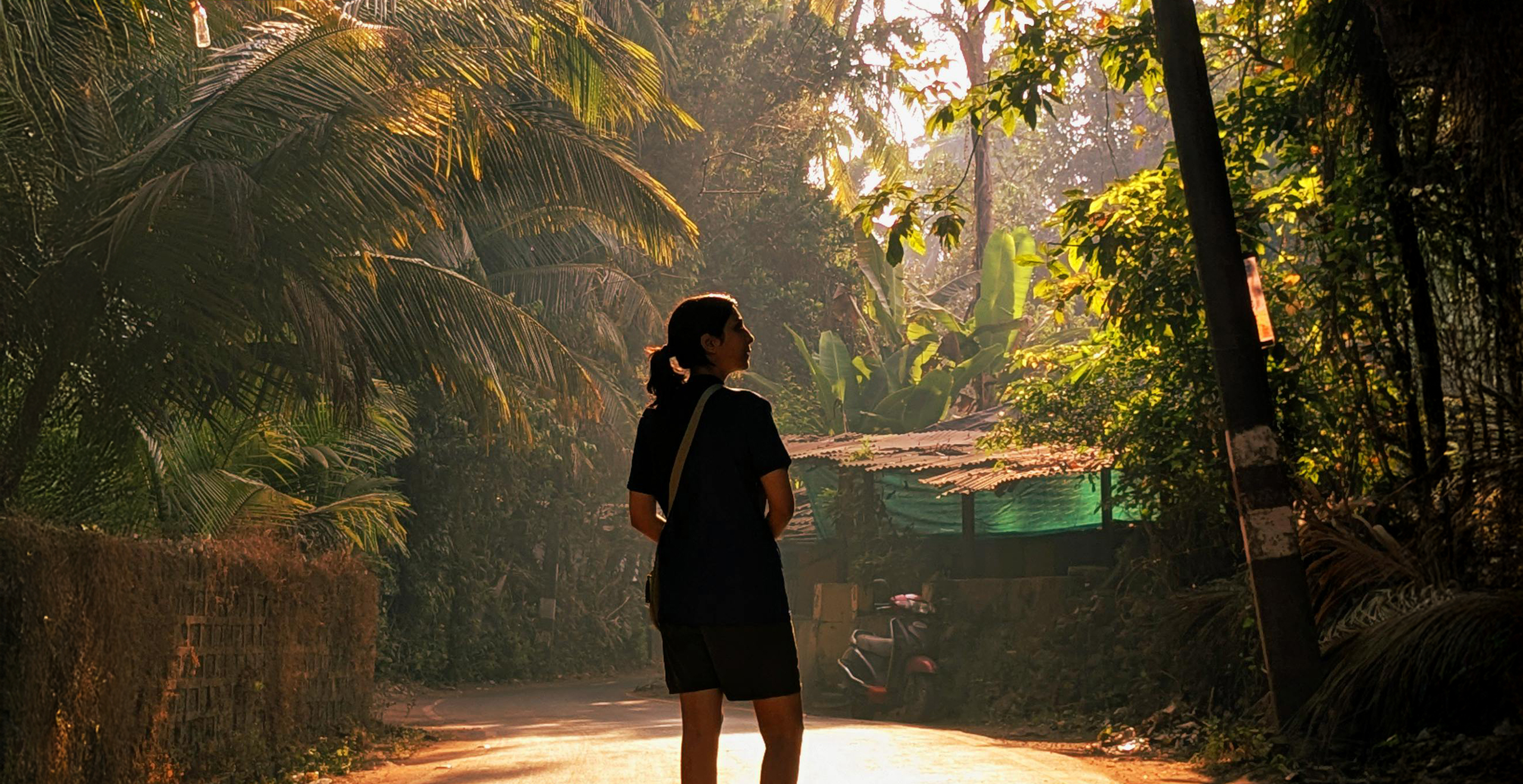
The green setting helps too. The village lanes are shaded by mango and coconut trees, the surrounding hillsides hold patches of forest, and the agricultural land in the valley floor gives the whole area an open, uncrowded feel. It is a different experience of Goa from the beach road, and for many visitors that difference is exactly the point.
Purple Valley Yoga Retreat
Purple Valley Yoga Retreat is one of the most established Ashtanga yoga centres in India and has been based in Assagao for many years. It is run on the Mysore method, meaning students practise individually within a group setting under the supervision of experienced teachers, rather than following a group class led by an instructor.
Purple Valley hosts visiting teachers from the global Ashtanga community each season, and the quality of instruction has built its reputation with serious practitioners over time. The retreat has a swimming pool, lush gardens, and accommodation on site. Programmes typically run for one or two weeks, and students are expected to commit to the full duration.
It is worth noting that Purple Valley is specifically focused on Ashtanga yoga in the traditional sense. Visitors looking for mixed yoga styles or lighter wellness activities would be better suited to one of the other options in the village.
Best for: Experienced yoga practitioners, those wanting serious Ashtanga instruction, students training to teach
Contact: Purple Valley Yoga Retreat, Assagao, North Goa
SWAN Yoga Retreat
SWAN Yoga Retreat is located in the hills above Assagao and takes a broader approach to practice than Purple Valley. Founded more than 15 years ago, it offers yoga teacher training courses, one-week yoga holidays for beginners, two-week intensives, and Ayurvedic treatments including Panchakarma during the season, which runs from October to May.
SWAN is grounded in classical Indian yoga philosophy rather than contemporary fitness-oriented approaches. Alongside asana practice, it teaches meditation, pranayama, yoga philosophy, and Ayurveda as an integrated system. The retreat has its own garden, an on-site temple, and dining that focuses on vegetarian food suited to the practice.
It attracts a mixed international group including complete beginners and those on longer spiritual or philosophical journeys, and the atmosphere is described consistently as community-orientated and unpretentious.
Best for: Those new to yoga, people wanting a broader philosophical context, longer stays of one week or more
Season runs October to May
Independent Teachers and Drop-In Classes
Beyond the two main retreats, Assagao has a network of independent yoga teachers offering morning classes, private sessions, and drop-in formats for visitors who are not committing to a structured programme. These operate from private gardens, rooftop spaces, and studio rooms in converted heritage buildings across the village.
The easiest way to find current options is to ask at any of the village cafes or check noticeboards in the area around the main village junction. The scene shifts seasonally as teachers come and go, so what is available in November may be different from what is available in February.
Ayurveda and Complementary Therapies
Several Ayurvedic practitioners and therapists operate in and around Assagao, offering consultations, massage treatments, and longer Panchakarma programmes. SWAN Yoga Retreat includes Ayurvedic treatment as part of its offerings, and there are also independent therapists working from private spaces in the village.
Assagao also has practitioners offering sound healing, reflexology, and various other complementary therapies. These are not as formally organised as the yoga retreats, but they form part of the broader wellness ecosystem that the village has developed over time.
The Slower Option: Just Being in Assagao
Not everyone who visits Assagao for wellness reasons signs up for a retreat programme. A significant part of the village's appeal is simply its atmosphere: the shaded lanes, the good coffee, the absence of the beach-road noise, and the sense that the village has a rhythm of its own that is not organised around tourism.
A slow morning in Assagao might involve breakfast at one of the organic cafes that source from local farmers, a walk through the heritage lanes, and perhaps an afternoon yoga class or an Ayurvedic treatment. That is a genuinely restorative way to spend time in Goa, and Assagao makes it easier than most places.
The village also hosts the Assagao Mehfil, a monthly music event in a heritage building that draws performances from classical Indian and international musicians. It is the kind of cultural offering that suits the quieter end of Goa's visitor spectrum well.
Inside Assagao's Indo-Portuguese Architecture: What to Look For and Where to Find It
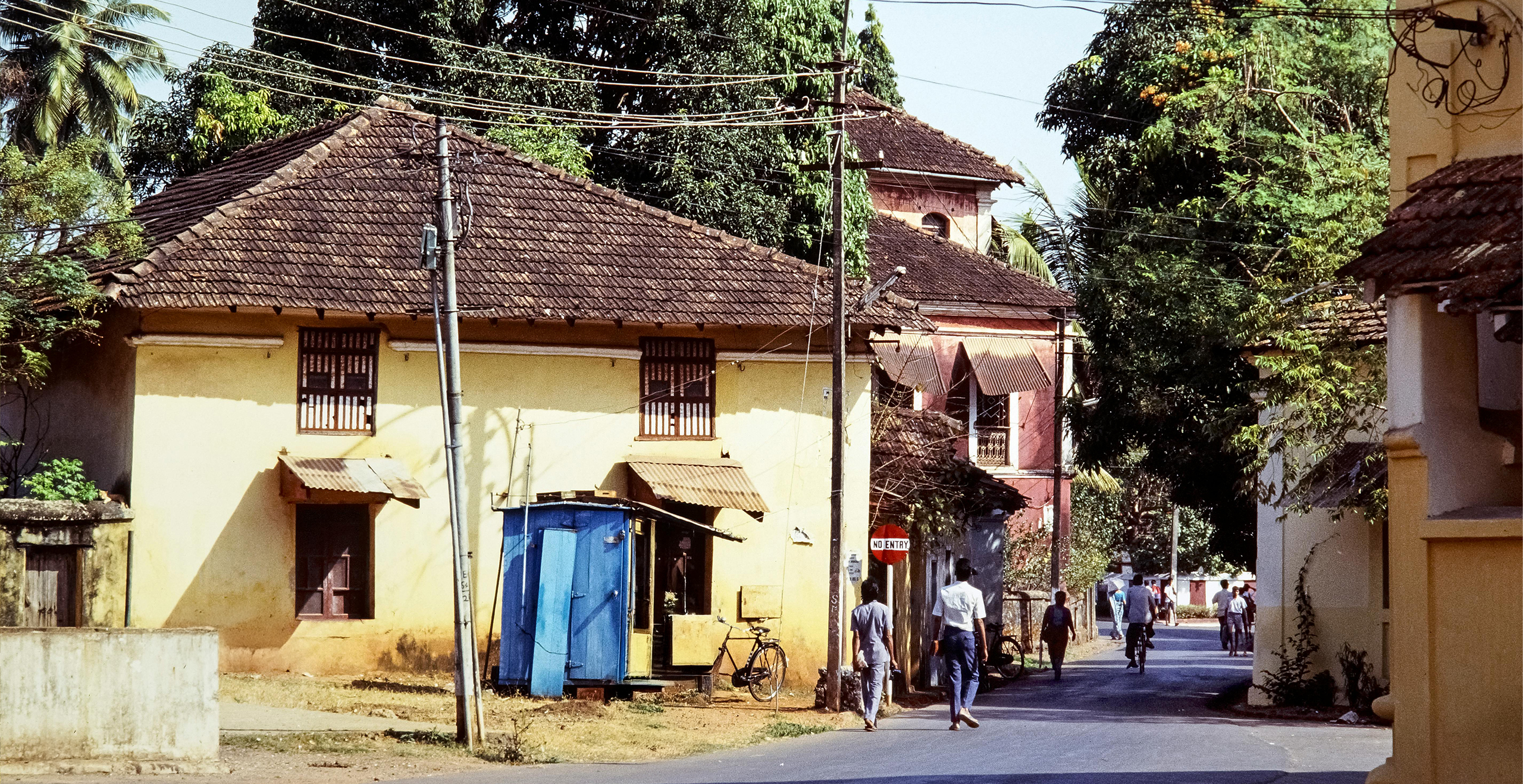
Assagao is one of the best places in North Goa to see Indo-Portuguese architecture up close, without queuing, without a tour bus, and without the crowds that gather around the more famous churches of Old Goa. The village has a dense concentration of heritage buildings from the 18th and 19th centuries, and most of them line ordinary residential streets that anyone can walk through.
If you know what you are looking at, a morning in Assagao becomes considerably more interesting. Here is a guide to the key buildings and the architectural details worth paying attention to.
What Is Indo-Portuguese Architecture?
The term refers to the building style that developed in Goa during the Portuguese colonial period, which lasted from 1510 to 1961. It combines Portuguese baroque and neoclassical influences with local Goan materials, craft traditions, and climate adaptations. The result is a style that does not look quite like anything in Portugal or in the rest of India.
The most characteristic features of Indo-Portuguese buildings in Goa include:
- Laterite stone construction, using the porous red-orange rock quarried locally, which keeps buildings cool and develops a distinctive patina over time
- Mother-of-pearl window inlays, thin sections of oyster shell set into wooden frames to diffuse light before glass was widely available
- Wide front verandas designed for socialising and cross-ventilation in Goa's humid climate
- High ceilings with carved wooden beams, typically in teak or jackfruit
- Symmetrical facades with decorative plasterwork around doorways and windows
- Enclosed internal courtyards or gardens that bring light into the centre of the building
- Oratory rooms, small private chapels built into Catholic family homes
Assagao has examples of all of these, often combined in a single building.
St Cajetan's Church
The most prominent building in the village is St Cajetan's Church, which stands on the main road through Assagao. It was originally constructed as a chapel in 1775, connected to the Anjuna parish, and became a full parish church in 1813. The current structure dates largely from a rebuild in the late 19th century.
The church has two quadrangular towers modelled on Corinthian columns and a whitewashed facade that is characteristic of Goan baroque. Inside, the wooden ceiling is decorated with painted stars, and the main altar is dedicated to Our Lady of Divine Providence. The building materials are local: laterite stone with lime plaster finish, the same combination used in the village's domestic architecture.
The courtyard outside the church is worth pausing in. It is one of the quieter corners of Assagao and gives a good view of the facade without the interruption of traffic.
The Pallottine Seminary (Vodle Ghor)
A short walk from the church is the building known locally as the Vodle Ghor, which means biggest house in Konkani. This was originally the grandest private mansion in Assagao, built by one of the village's most prominent landowning families during the Portuguese era. It now houses the Pallottine Seminary, an institution that trains Christian priests.
The building is notable for its scale and for the mix of influences it contains. Inside the main courtyard, a very old tree grows through the space, its canopy spreading above the corridors. The seminary teaches both Indian and Western philosophy, and visitors who speak to the staff there will find a place that takes its history seriously.
Near the seminary on the Badem-Mapusa road is the Cheshire Cat Gallery, a small art and jewellery space housed in another heritage building close to the Pallotti Institute.
The Kator Pillar
A short walk from St Cajetan's Church brings you to the Kator Pillar, a carved stone structure that predates the Portuguese period. In Hindu tradition, a kator pillar represents a dipastambha, a temple lamp that would have stood at the entrance to a significant temple. Its survival through centuries of colonial rule, and its position just steps from the church, is a good example of the layered religious history that Assagao carries.
The Kator Pillar is easy to miss if you are not looking for it. The Assagao Heritage Walk passes it as part of the route.
The Domestic Architecture
Beyond the major landmarks, much of Assagao's architectural interest lies in its ordinary residential streets. Walking the lanes between the church and the valley floor, you will find smaller ancestral homes with carved wooden balconies, ornate door surrounds in lime plaster, old wells in enclosed courtyards, and facades painted in faded ochre, terracotta, and washed-out blue.
Many of these homes are still lived in by Goan families and have not been converted or renovated. They are not open to visitors, but their exteriors are entirely visible from the street and make for some of the most photogenic streetscapes in North Goa.
A number of the larger properties have been sympathetically restored in recent years and now operate as boutique stays or private villas, preserving original floor tiles, exposed laterite walls, and wooden ceilings while adding modern facilities.
The Assagao Heritage Walk
The most structured way to engage with the village's architectural history is the Assagao Heritage Walk, organised by Felly Gomes of the Live Happy NGO. The walk covers the main heritage sites, explains the history of the buildings and the families associated with them, and ends with a local home-cooked meal and Goan folk music.
The walk is run on demand rather than on a fixed schedule, so it is worth contacting the NGO in advance to arrange a time. It lasts a few hours and covers a manageable distance on foot through the village lanes.
From Flower Village to North Goa's Most Talked-About Address: The Story of Assagao
Assagao sits about four kilometres west of Mapusa, tucked into a small valley surrounded by hills on three sides. It is not a beach village. There is no main strip, no party scene, and no famous stretch of coastline. What it has instead is something that has drawn a steady stream of travellers, artists, and long-term residents over the past two decades: genuine character.
Understanding what Assagao is today means understanding where it came from, because the two are more connected than they might first appear.
The Flower Village
Assagao's oldest nickname is Fullanchom Ganv, which translates from Konkani as the village of flowers. For generations, its residents grew marigolds, jasmine, crossandra, and chrysanthemum in a communal plot of land called the Fullamcho Mollo, then took their garlands down to sell at Mapusa's Friday market, which still operates today just a few kilometres away.
The village is set in a natural basin, reached from Mapusa by a road that climbs a short hill before descending into the valley. This geography kept Assagao a little separate from the coastal bustle to the west, and that separation has shaped its character ever since.
Portuguese Goa and the Heritage Mansions
Like the rest of Goa, Assagao was under Portuguese rule for over 450 years. The earliest recorded inhabitants were Saraswat Brahmins of the Atri gotra, with Ravalnath as the village deity, and much of the pre-Portuguese landscape has been absorbed into the village's layered history rather than erased by it.
The colonial period left two lasting marks on Assagao's physical appearance. The first is St Cajetan's Church, originally built as a chapel in 1775 and affiliated with the Anjuna parish. It became a full parish church in 1813 and was rebuilt in the late 19th century. Its whitewashed facade and Corinthian-style towers are among the most photographed landmarks in the village today.
The second legacy is the Indo-Portuguese mansions built by local landowners during the same era. These are grand private houses with wide verandas, laterite walls, high wooden-beam ceilings, and mother-of-pearl window inlays, a material used to diffuse light before glass became common in Goa. Many survive in good condition and define the village's streetscape.
How Assagao Changed
The shift Assagao is best known for now began in the early 2000s, when the village started attracting a different kind of resident and visitor. Artists, designers, chefs, and internationally connected entrepreneurs discovered that Assagao's heritage homes and quiet lanes offered something rare in North Goa: space, beauty, and a pace of life that the coastal villages no longer had.
Restaurants opened in restored villas. Yoga retreats set up in the hills above the village. Boutiques took root in old Goan houses. The village acquired a string of nicknames, including Goa's Beverly Hills and Goa's Tuscany, that reflect both its appeal and the significant rise in property values that accompanied it.
Land prices in Assagao are now among the highest in Goa, and longtime residents have been vocal about the pressures that rapid development has placed on the village's green cover and water table. It is a tension that many desirable places face, and Assagao is navigating it in real time.
What It Looks Like Today
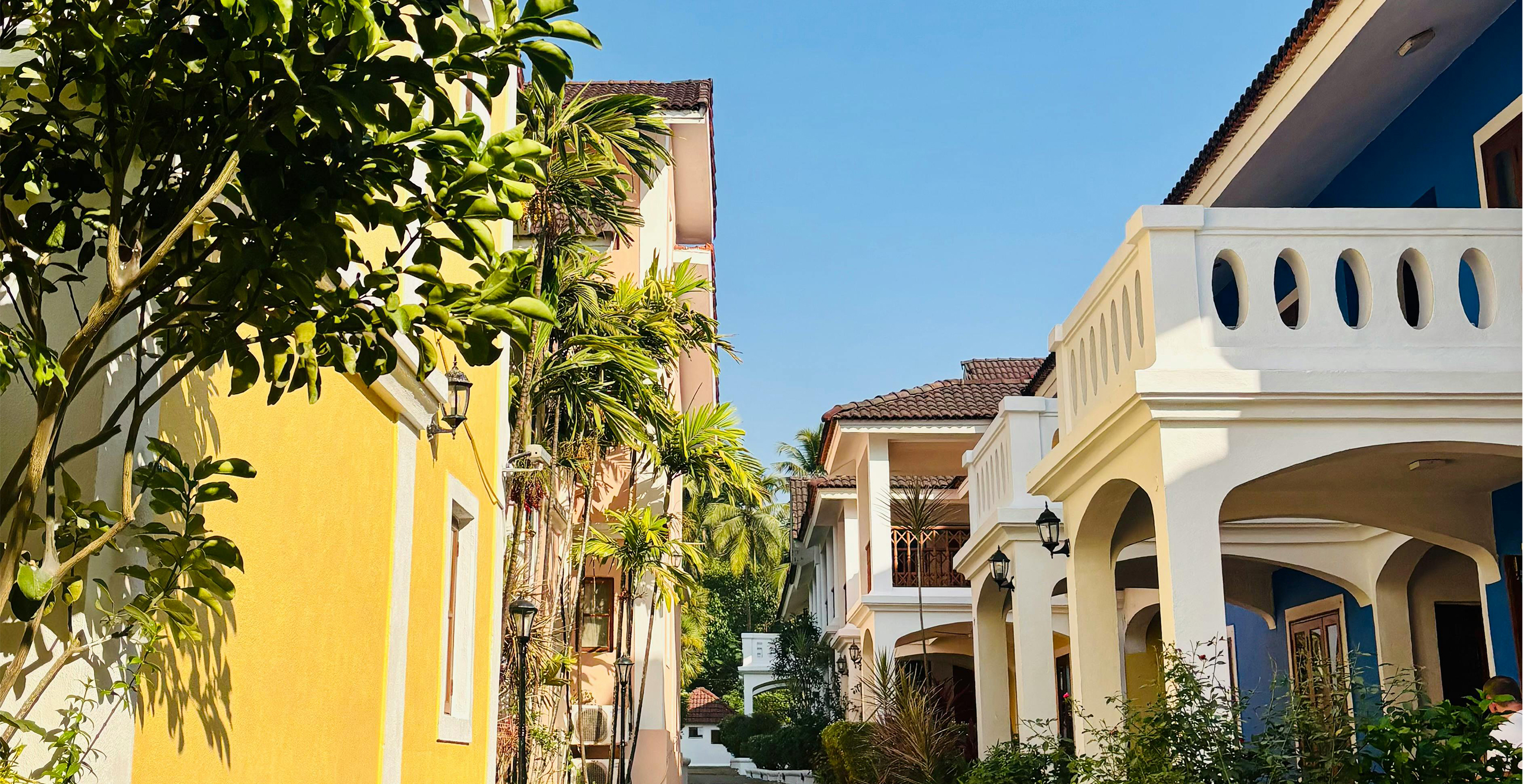
Assagao today is a mix of the old and the new, and the best parts of it are where the two coexist well. The heritage mansions are still here, some converted into boutique stays or cultural spaces, others still private family homes. The church courtyard is quiet and unhurried. The lanes are shaded by mango trees and lined with bougainvillea.
Alongside all of this, there are now well over 100 restaurants and cafes in and around the village, a yoga retreat scene with international reach, independent design boutiques, and a monthly music series called Assagao Mehfil held in a heritage building. The Assagao Heritage Walk, run by the Live Happy NGO, offers a guided introduction to the village's history for visitors who want context alongside the coffee.
Assagao is not a secret any more, if it ever truly was. But it remains a place with its own identity, which in North Goa is increasingly rare.
Why Choose Villa Over Hotel in North Goa
Why settle for cramped hotel rooms when North Goa's incredible restaurant scene and pristine beaches are calling? With world-class eateries like Thalassa, Rabbit Hole, and dozens of beach shacks just minutes away, choosing a private villa over a traditional hotel transforms your North Goa experience from ordinary to extraordinary. Heritage Goa's spacious villas offer the perfect base to explore Siolim's culinary hotspots, hidden beaches, and authentic Goan culture without the restrictions and crowds of hotel stays. When you have access to North Goa's best restaurants, beaches, and experiences right at your doorstep, why limit yourself to hotel dining rooms and shared facilities? This guide explains why villa stays in North Goa, especially near Heritage Goa, offer unmatched freedom, privacy, and value for your holiday.
1. Complete Privacy vs Shared Hotel Spaces
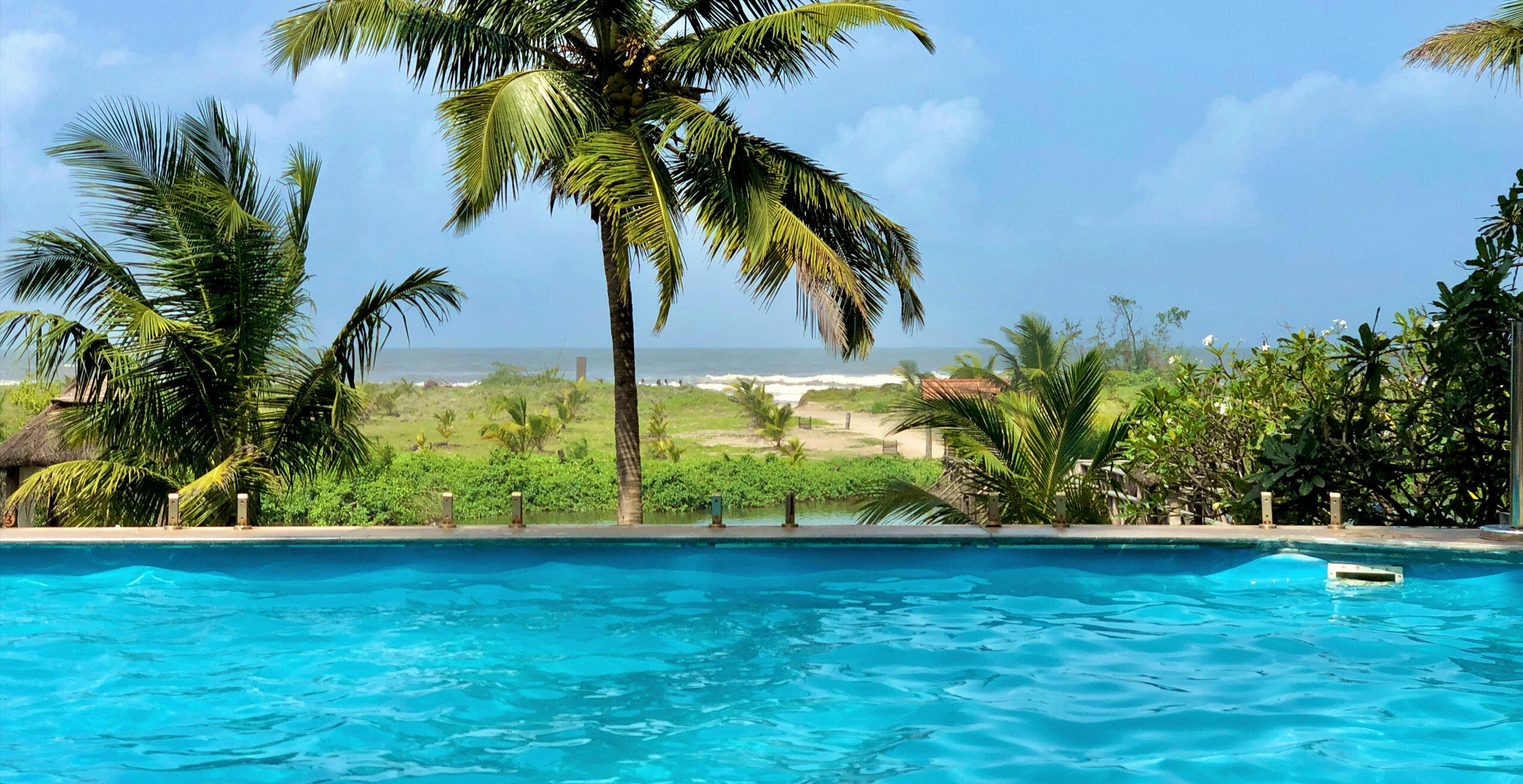
Private villa living means exclusive access to your entire property - no sharing pools with screaming children, no crowded hotel lobbies, no waiting for elevators. In a private villa, the pool, gazebo, lawns, terrace gardens, etc are all to yourself. You don't have prying eyes while you jump in the pool, sip on your cocktails, or dance to your favourite music. Heritage Goa's villas offer spacious private compounds where you can truly relax, entertain, and enjoy intimate moments with family and friends.
Villa Advantage: Exclusive private pools, gardens, and entertaining spaces
Best For: Families, couples, friend groups seeking privacy, romantic getaways, celebrations
2. Explore North Goa's Restaurant Scene Freely
Why be restricted to hotel restaurants when North Goa's incredible dining scene is waiting to be explored? With Heritage Goa as your base, you're minutes from Siolim's top restaurants like Thalassa for sunset dinners, Rabbit Hole for brunch, and dozens of authentic beach shacks serving fresh seafood. Villa stays give you the flexibility to dine wherever you want, whenever you want, without hotel meal plans or limited room service menus.
Dining Freedom: Access to 50+ restaurants within 30 minutes, flexible meal times
Best For: Food enthusiasts, couples wanting romantic dinners, families with different dining preferences
3. Beach Access Without Hotel Crowds
Villa locations near Heritage Goa put you closer to North Goa's best beaches than most hotels, without the crowded hotel beach areas filled with deck chairs and overpriced drinks. Access hidden gems like Querim Beach, Kakolem Beach, and quiet sections of Mandrem and Ashwem directly, enjoying pristine sands and authentic beach shack experiences that hotel guests rarely discover.
Beach Benefits: Direct access to hidden beaches, authentic beach shack culture, no crowded hotel beach areas
Best For: Beach lovers, photographers, water sports enthusiasts, families wanting safe swimming
4. Space & Comfort for Groups
A luxury villa in Goa commonly has 4 to 5 bedrooms, spacious kitchen, bathrooms, while hotels cram families into adjoining rooms with thin walls. Heritage Goa villas offer multiple bedrooms, living areas, and outdoor spaces where everyone can spread out comfortably. You will also save money because the per-person cost will be lower compared to what you pay at hotels offering the same amenities and comforts.
Space Advantage: 3-5 bedrooms, multiple living areas, full kitchens, private outdoor spaces
Best For: Large families, friend groups, multi-generation holidays, extended stays
5. Authentic Cultural Immersion
Villa stays in heritage properties like Heritage Goa offer authentic Portuguese colonial architecture and genuine Goan hospitality, something generic hotels simply cannot replicate. You're staying in historic buildings with character, surrounded by local communities, markets, and traditional Goan life rather than sterile hotel corridors filled with tourists.
Cultural Benefits: Portuguese colonial architecture, local community interaction, authentic Goan lifestyle
Best For: Culture seekers, history enthusiasts, travelers wanting authentic experiences, repeat visitors
6. Flexibility & Independence
Hotels restrict your schedule with fixed meal times, pool hours, and checkout procedures. Villa living means complete freedom - sleep in, cook breakfast when you want, invite friends over, host dinner parties, or return at any hour without hotel curfews. Stay in a villa for a night and you will never go to a hotel again. Our villas offer all the luxuries you will find in a hotel, with the additional benefit of privacy and seclusion.
Freedom Benefits: No fixed schedules, 24/7 access, ability to entertain guests, flexible check-in/out
Best For: Independent travelers, business travelers, families with young children, party groups
7. Better Value for Money
Villa stays often cost less per person than equivalent hotel rooms, especially for groups, while offering significantly more space and amenities. When you factor in saving money on hotel restaurants by exploring North Goa's incredible local dining scene, plus no resort fees or hidden charges, villa accommodation provides exceptional value for authentic experiences.
Cost Benefits: Lower per-person costs for groups, no hidden resort fees, savings on dining out
Best For: Budget-conscious families, extended stays, groups of 4 or more, value seekers
With North Goa's world-class restaurants like Mountain Goat, Alag, and Shiori just minutes away, plus easy access to hidden beaches and authentic cultural sites, choosing a Heritage Goa villa over a restrictive hotel stay transforms your vacation into a truly personalized experience. You get the luxury of private space, the freedom to explore incredible local dining, authentic cultural immersion, and better value for money. Whether you're planning romantic dinners at Thalassa, morning yoga on hidden beaches, or entertaining friends in your private villa, Heritage Goa provides the perfect base for experiencing the real North Goa that hotel guests rarely discover. Book your villa stay and experience the difference that privacy, authenticity, and location can make to your North Goa holiday.
7 Hidden Beaches in North Goa
North Goa isn't just about crowded Baga and Calangute beaches – it's home to spectacular hidden coastal gems that offer tranquil escapes just minutes from Heritage Goa. These secret beaches provide the perfect blend of natural beauty, serenity, and authentic Goan charm away from tourist crowds. Whether you're seeking quiet sunset spots, pristine swimming waters, or Instagram-worthy photography locations, this guide reveals North Goa's best hidden beaches that most visitors never discover. If you're searching for secluded beaches in North Goa, hidden gems near Heritage Goa, or peaceful coastal spots for relaxation, this guide covers it all.
1. Querim Beach (Keri Beach)
Querim Beach, also known as Keri Beach, is North Goa's northernmost secret – a pristine stretch of golden sand that remains blissfully uncrowded. Located at the state's northern tip, this virgin beach offers crystal-clear waters ideal for swimming and spectacular sunrise views over the Arabian Sea. With no commercial beach shacks cluttering the coastline, it's pure untouched nature at its finest.
Distance from Heritage Goa: 45 minutes
Best For: Sunrise photography, meditation, peaceful walks, and romantic sunsets
2. Kakolem Beach (Tiger Beach)
Often referred to as Tiger Beach, Kakolem is a true hidden gem accessible only via a scenic 20-minute trek through dense vegetation. This secluded cove rewards adventurous visitors with dramatic cliff backdrops, pristine sands, and some of North Goa's most spectacular sunset views. The dramatic setting with natural rock formations makes it perfect for adventure photography.
Distance from Heritage Goa: 35 minutes + 20-minute trek
Best For: Adventure enthusiasts, photographers, couples seeking privacy, and sunset chasers
3. Mandrem Beach (North Section)
While Mandrem's southern section is well-known, the northern stretch near the Mandrem-Arambol border remains wonderfully quiet. This hidden section offers soft white sand perfect for beach walks, calm shallow waters ideal for families, and excellent dolphin spotting opportunities. The minimal commercialization and beautiful coconut palm groves create an authentic Goan beach experience.
Distance from Heritage Goa: 25 minutes
Best For: Family outings, morning yoga, beach reading, and peaceful swimming
4. Kalacha Beach (Half Moon Beach)
Kalacha Beach, also called Half Moon Beach, is a crescent-shaped hidden cove tucked between Arambol's main beach and the famous Sweet Lake. This natural amphitheater setting has become a haven for yoga enthusiasts and nature lovers seeking tranquility. The beach is famous for its butterfly season from October to March, creating magical natural spectacles.
Distance from Heritage Goa: 40 minutes
Best For: Yoga sessions, nature photography, peaceful sunbathing, and meditation
5. Morgim Beach (North Creek Section)
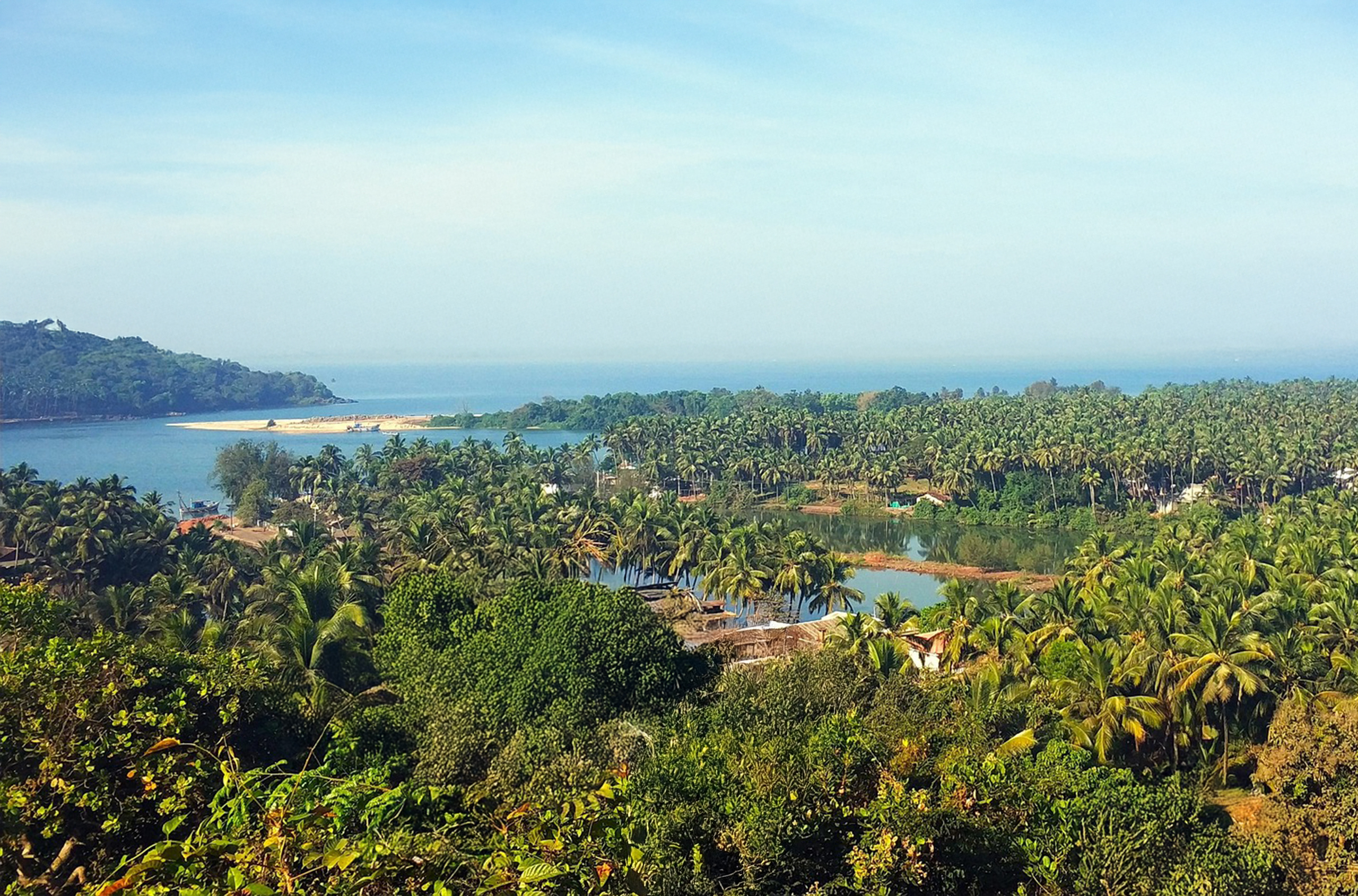
While Morjim's main beach is popular with tourists, the northern creek section near the Chapora River mouth remains a peaceful sanctuary. This area is famous for Olive Ridley turtle nesting and offers stunning backwater views with unique river-meets-sea landscapes. The peaceful fishing village atmosphere and excellent bird watching opportunities make it perfect for eco-conscious travelers.
Distance from Heritage Goa: 20 minutes
Best For: Wildlife enthusiasts, bird watchers, nature photographers, and turtle spotting (November-February)
6. Ashwem Beach (South Section)
The southern stretch of Ashwem, away from the main beach clubs, offers pristine conditions for water sports enthusiasts and authentic cultural experiences. With consistent waves perfect for surfing, traditional fishing boats, and local fishing village culture, it's less commercialized than central Ashwem while offering beautiful laterite cliff views nearby.
Distance from Heritage Goa: 30 minutes
Best For: Surfing lessons, cultural photography, authentic Goan experiences, and peaceful beach days
7. Ozran Beach (Little Vagator)
Often overshadowed by famous Vagator Beach, Ozran Beach (locally known as Little Vagator) offers dramatic red laterite cliff formations and a more intimate setting. This smaller, more secluded beach features natural rock pools during low tide and stunning sunset views, making it perfect for photography enthusiasts and romantic escapes.
Distance from Heritage Goa: 15 minutes
Best For: Photography enthusiasts, romantic escapes, sunset viewing, and cliff exploration
Whether you're seeking pristine swimming waters, dramatic cliff-backed coves, or peaceful turtle nesting sites, North Goa's hidden beaches offer diverse experiences just minutes from Heritage Goa. Each of these secret coastal gems provides authentic natural beauty away from commercialized tourist circuits, perfect for a tranquil escape after exploring heritage sites or bustling markets. If you're looking for secluded beaches in North Goa, peaceful coastal spots near Heritage Goa, or simply hidden gems for photography and relaxation, this list offers something for every traveler seeking authentic Goan experiences. Plan your hidden beach adventure and discover the unspoiled side of North Goa that few tourists ever experience!

5 Must‑Try Restaurants in Siolim, Goa
Siolim in North Goa isn’t just a scenic riverside village, it’s quickly becoming a culinary hotspot. Whether you're staying at Heritage Goa or just passing through, this laid-back part of North Goa offers some of the region’s most memorable food experiences. From vegan-friendly brunch cafés to atmospheric sunset restaurants, Siolim has something for every kind of foodie. If you're searching for the best restaurants in Siolim, where to eat near Heritage Goa, or vegan dining options in North Goa, this guide covers it all.
1. Thalassa
A Siolim landmark, Thalassa blends Greek warmth with Goa’s sunset vistas, just a few minutes from Heritage Goa. Known for its lively atmosphere, panoramic sea views, and Mediterranean plates (think fresh seafood, moussaka, and signature G&Ts), it’s perfect for sunset dinners or group outings. Consistently rated among the top spots in Siolim, it’s a destination where views and flavors come together beautifully.
Popular Timings: 6:00 PM – 8:30 PM (sunset hours and live showtimes)
Best For: Sunset dinners, lively atmosphere, and group gatherings
2. Rabbit Hole
The Rabbit Hole is where art meets the plate. This stylish bistro boasts boho-chic decor and creative plating, serving all-day breakfasts, bowls, burgers, and croissant sandwiches. Its imaginative menu marries international flavors with local ingredients, making it both Instagram-worthy and palate-pleasing. A daytime brunch favorite or evening chill spot that stands out in Siolim’s evolving culinary scene.
Popular Timings: 9:00 AM – 11:00 AM (brunch) and 6:00 PM – 8:00 PM (dinner)
Best For: Brunch, vegan options, and relaxed café vibes
3. Mountain Goat
For cozy global comfort food with a Goan twist, Mountain Goat is highly recommended. Modeled after a rustic alpine lodge, it offers Tibetan and Nepali dishes like jhol momos and sadeko momos, plus light desserts like coconut cream sangkaya. A hidden gem that feels warm, casual, and decidedly offbeat, a true foodie find in Siolim.
Popular Timings: 7:00 PM – 9:00 PM
Best For: Laid-back dinners and authentic Himalayan comfort food
4. Alag (Café Alag)
Cafe Alag (meaning “different”) focuses on local ingredients and inventive small plates. Known for cloud-like Japanese-style cheesecakes, chicken sandos, and a rotating tasting menu of regionally inspired dishes, it's a quiet spot near St. Anthony’s Church. With flaked sushi-like desserts and artisan coffee, it's ideal for those seeking thoughtful flavors in a serene setting.
Popular Timings: 12:00 PM – 2:00 PM (lunch) and early evenings
Best For: Quiet lunches, creative plates, and a minimalist setting
5. Shiori
A Goan twist on Japanese yakitori, Shiori delivers sushi, ramen, noodles, and grilled skewers in exposed brick surroundings. An authentic yakitori bar with subtle Goan undertones, it offers an excellent change of pace from traditional Goan cuisine. A top pick for those craving clean, flavorful Japanese dishes in a casual Siolim setting.
Popular Timings: 7:00 PM – 10:00 PM
Best For: Japanese cuisine and quiet, elegant dinners
Whether you're craving classic Goan seafood, vegan brunch bowls, or Japanese small plates, Siolim has a diverse range of restaurants to explore. Each of these eateries is located just minutes from Heritage Goa, making them perfect for a relaxing meal after a heritage walk or beach day. If you're looking for authentic restaurants in North Goa, best vegan cafés near Siolim, or simply quiet places to eat in Goa, this list offers something for every mood and taste. Bookmark this guide for your next Siolim food trail and don’t forget to call ahead during peak season!